2024-2025 Kids Brain Health Impact Report
Advancing a healthier, more inclusive future
Executive summary
In the 2024–2025 fiscal year, with seven months of Strategic Science Fund (SSF) support, Kids Brain Health Network (KBHN) implemented high-impact initiatives for children with neurodevelopmental disabilities (NDDs) in Canada. KBHN strategically deployed $2 million in SSF Funding for the Implementation and Innovation projects to mobilize a total of $6.71 million investment, leveraging support from 68 partners representing academia, healthcare, government, community organizations, and the private sector. KBHN’s inaugural national call for proposals attracted 28 submissions under innovation and implementation funding streams. Following a rigorous, merit-based evaluation process—which included reviewers with lived experience—11 projects were selected for funding. These initiatives were launched by the end of March 2025 and span nine provinces and territories: British Columbia, Alberta, Saskatchewan, Manitoba, Ontario, Quebec, Nova Scotia, Newfoundland and Labrador, and Yukon.
The year also marked significant progress in embedding end-user voices in KBHN’s operations. The National Youth Advisory Council (NYAC), funded and supported by KBHN, contributed directly to shaping the Network’s engagement strategy, knowledge translation activities, and digital communications. NYAC members, who represent a range of neurodevelopmental experiences and come from across Canada, brought valuable insights into the accessibility and relevance of KBHN initiatives. Further reinforcing this commitment, KBHN continued its partnership with CanChild to deliver the Family Engagement in Research (FER) program. FER provides co-training for family members and researchers, equipping both with skills for reciprocal, collaborative work. A dedicated family partnership broker ensured equitable onboarding and participation for family representatives within KBHN-funded initiatives.


Together, these early results reflect a high-performing, impact-oriented approach to advancing pediatric NDD research and implementation. KBHN not only met but exceeded the commitments outlined in its first-year corporate plan, rapidly accelerating the implementation of research innovations identified as federal and multi-ministerial priorities. This progress was achieved through an unwavering focus on end-user engagement, ensuring that individuals with lived and living experience remained central to every stage of design, decision-making, and delivery. By building infrastructure, fostering inclusion, and enabling immediate uptake, KBHN has exceeded expectations outlined in its Year One corporate plan and has laid a strong foundation for expanded delivery in the years ahead.
Our vision
All children living with neurodevelopmental disabilities enjoy a good quality of life and inclusion in all aspects of society and reach their full potential.

Our mission
Through catalyzing collective action across sectors, KBH+ ensures optimal care and better outcomes for children with neurodevelopmental disabilities and their families.

KBH+ focuses on proven solutions in three key areas:

Early identification
Identifying neurodevelopmental disabilities early leads to timely interventions. Too often, children are not identified during the critical early periods of brain development when interventions have the most significant impact on the trajectory of their disabilities. KBH+ supports initiatives that advance diagnosis into infancy, allowing early identification of neurodevelopmental disabilities in children.

Effective interventions
Early interventions have the greatest impact on children with neurodevelopmental disabilities. KBH+ works at the cutting edge of brain health to ensure all children and families can access effective interventions.

Family support
Families raising children with neurodevelopmental disabilities face challenges that affect most aspects of their lives. KBH+ collaborates with experts with lived experience to advance strategies and projects that enhance family support, reduce family stress, improve communication, and increase access to resources that help children reach their full potential.
Objectives and achievements
Your content goes here. Edit or remove this text inline or in the module Content settings. You can also style every aspect of this content in the module Design settings and even apply custom CSS to this text in the module Advanced settings.
Objective One: Catalyze implementation ready innovations and advance a pipeline of research innovations
KBHN is actively catalyzing the implementation of ready-to-scale innovations while simultaneously advancing a national pipeline of promising research through the successful funding of 13 projects across its Implementation, Innovation, and Strategic Opportunities streams. This milestone surpasses initial targets, made possible by a strategic co-funding partnership with Brain Canada that significantly extended the reach of federal SSF dollars.
The Network’s inaugural call attracted a record 28 project proposals, demonstrating strong demand and alignment with KBHN’s mission. Funded projects were selected through a rigorous, merit-based review process that incorporated the expertise of scientific and community stakeholders, including individuals with lived and living experience of neurodevelopmental disabilities.
We built an expert Programs Advisory Committee made up of 50% persons with lived and living experience (PWLLE) to inform the adjudication, selection, and evaluation of our SSF-funded programs. KBHN also required all funded projects to have a PWLLE on the team and engaged throughout the lifecycle of the project.
Objective Two: Accelerate equitable and sustainable uptake of solutions by innovating and adopting processes that support the scale and spread of research innovations.
 KBHN has offered wrap-around services to promote implementation and business knowledge for our teams. We are especially proud of our innovative Implementation Community of Practice which is becoming a highly sought-after resource in the child-health implementation space.
Launched in September 2024, and facilitated by KBHN member, Dr. Vanessa Tomas, KBHN’s Implementation Community aims to advance implementation science efforts in NDD. The Implementation Community emerged initially as a safe, collaborative environment for KBHN project teams to learn together, work through implementation-related challenges collaboratively, and discuss their implementation activities. It has since evolved to comprise two initiatives: webinar sessions and community group sessions. Now, KBHN’s Implementation Community is building implementation capacity and creating connections nationally as well as exploring and clarifying the practices, processes, and impacts of using implementation science in the NDD field.
Webinar sessions are offered bimonthly online and are open to everyone in the KBHN network. Sessions have had >150 registrants total and >45 attendees (at each session) from across Canada, with an average satisfaction rating of 3.8/4.
“Fantastic session with passionate, knowledgeable and engaging presenters. Motivated to dive more into this work and can’t wait for future session.” – Attendee
Our Implementation Community Group includes KBHN-affiliated individuals who are taking or have completed The Center for Implementation Courses (Level 1 or 2 Implementation Support Specialist Certification) or individuals with implementation experience. They meet bimonthly to ask questions, share resources, reflect, and problem-solve related to varying implementation topics (e.g., assessing barriers and facilitators, implementation support programs, scaling innovations) in relation to members’ activities and KBHN projects.
“It’s been rewarding to engage with others who are passionate about moving evidence into action and implementation science, especially in ways that are meaningful to children and families. I’ve enjoyed the open, thoughtful conversations and the chance to re ect on both the science and the real-world impact of our work. This community has helped bridge my academic background with my current role in public health and service delivery.” – Network member
Objective Three: Strengthen capacity in Canada’s Research System through education, training and outreach programs
Entrepreneurship and commercialization certification training and support
KBHN is committed to being a strong partner with our funded projects to help them realize their success. By pursuing a fund and foster mentality, we provide funding not only for implementation but also commercialization and translational research to further advance Canada’s economic goals while also advancing health and social outcomes for equity-deserving groups, especially children with neurodevelopmental disabilities and their families.
KBHN has invested in highly qualified personnel (HQP) by providing project teams with access to certification through The Center for Implementation (TCI) and by providing teams with further implementation expertise through TCI review and consultation services.
KBHN provided projects with business development, intellectual property, and commercialization education and support through Venture Labs at Simon Fraser University. This process also helped to establish an entrepreneurship framework for KBHN moving forward in selection of ventures stemming from academia. KBHN Advisor, Business and Commercialization further provided training and advice to project teams.
Through these partnerships KBHN was able to advance commercialization readiness for six projects in the NDD space and to plan and host a Project Showcase for funding, networking, and growth opportunities. The event was well attended with a total of 48 attendees from across Canada, representing stakeholders from research and business ecosystems, including members of the investment community.
Policy development
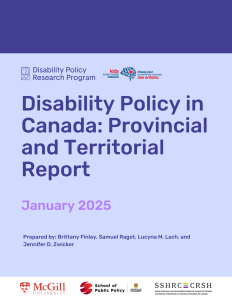 The Disability Policy in Canada: Provincial and Territorial Report was commissioned by KBHN and developed in collaboration with researchers from the Disability Policy Research Program (DiPo) at the University of Calgary and McGill University. This report offers a comprehensive overview of the current state of disability policy across Canadian provinces and territories and serves as a critical baseline for assessing and understanding future policy progress.
In response to the policy work, the Alliance for Disability Voices, Advocacy, and National Community Empowerment (ADVANCE) Network was established. This national initiative brings together researchers, community partners, and PWLLE, united by a commitment to improve access to provincial and territorial disability programs for Canadian neurodiverse youth and their families. To build on the findings of the initial report, four ADVANCE Network Fellows will conduct region-specific analysis and compile information on current disability-related policies and programs:
- Western: British Columbia, Yukon, Northwest Territories
- Prairies: Alberta, Saskatchewan, Manitoba
- Central: Ontario, Quebec, Nunavut
- Atlantic: New Brunswick, Nova Scotia, Prince Edward Island, Newfoundland and Labrador
ADVANCE Network aims to collaborate with provincial governments in developing and advancing cross-ministry disability strategies. This includes addressing persistent challenges such as lengthy waitlists for services, gaps in the training and support of the developmental services workforce, and fragmented service delivery systems.
By working in partnership, we can co-design integrated and responsive childhood disability supports that ensure more equitable and timely access for families.
Meet the ADVANCE Network Fellows
Attract, train, mentor & support family partners and researchers in Patient-Oriented Research
KBHN actively advanced patient-oriented research by fostering meaningful partnerships between families, youth, and researchers. Central to this effort was the requirement for PWLLE to be represented on all successfully funded projects and embedded throughout the research lifecycle.
Additionally, CHILD-BRIGHT (a SPOR initiative) and KBHN’s National Youth Advisory Council (NYAC) played a critical role in shaping research priorities and advancing inclusive, youth-led approaches to patient-oriented research. With representation across provinces, disability types, and lived experiences, NYAC members provided ongoing guidance to research teams, co-developed engagement frameworks, and contributed to the design and dissemination of multiple KBHN-funded projects. This group was fully engaged in the KBHN website redesign to ensure the language and design is assessable to all audiences.
KBHN also funded the FER project in partnership with CanChild, which trains family members and researchers together in best practices for collaboration. This project equips participants with tools to foster reciprocal partnerships, enhance communication, and integrate family priorities into research planning and implementation. KBHN-funded family partnership broker connected and supported these family partners so they could participate as equal members in the research and implementation activities.






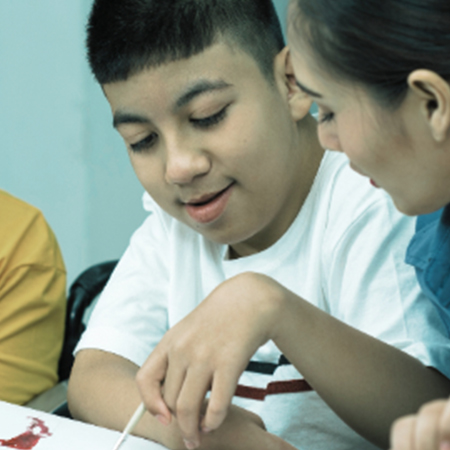
Kids Brain Health Foundation
This year has been a true turning point for the Kids Brain Health Foundation (KBHF).
For many years, the KBHF was recognized for securing competitive grants to support groundbreaking research. That strong foundation is what has brought this exciting new stage of growth. Now, KBHF is evolving into a well-rounded, forward-looking organization that reflects the changing mandate of the entire Kids Brain Health enterprise. The Foundation is dedicated to ensuring that groundbreaking research reaches the children, families, and communities who need it most.
KBHF focuses on implementation, scale, and spread: taking proven solutions out of academic journals and into homes, classrooms, and clinics across the country.

Thanks to the generosity of donors and the tireless work of partners, KBHF has been able to support projects that make a tangible difference in children’s lives — from helping a child with sound sensitivity feel safe in everyday environments, to empowering caregivers, to expanding innovative therapies across provinces.
Moving forward, KBHF continues to build its reputation, expanding into new areas including venture philanthropy and taking the lead on bringing back KBH+’s national conference in 2026. KBHF’s mission is clear: to transform scientific breakthroughs into real-world solutions for children with neurodevelopmental disabilities and their families.
KBHF Programs



Thank you for our donors
Every milestone we have reached this year has been made possible through the generosity of our donors and partners. Your belief in our mission allows us to support projects that are transforming care for children with NDDs and their families across Canada. Without you, none of this would be possible. Because of you, more children are receiving the vital supports they need and more families are finding hope for the future.
Your donation makes a difference.


Stay Connected with KBH+
Follow us on social media
Subscribe to our newsletter to stay updated with the latest KBH+ news, events, and opportunities.