Engineering new possibilities for kids and youth with neurodisabilities
May 7, 2026 | News
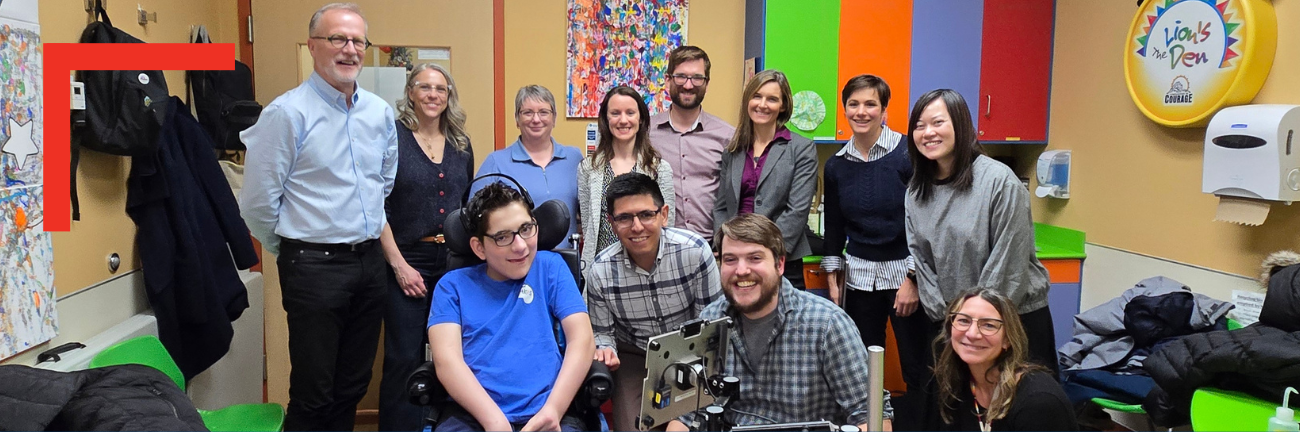
The KBH+ team visits the BCI4Kids lab at Alberta Children’s Hospital.
Every child deserves the chance to grow, learn, and thrive. Yet for the one in 10 children and youth in Canada living with a neurodisability (ND), that opportunity is often out of reach. Families face years-long waitlists for diagnosis, limited access to essential services, and out-of-pocket costs such as supports and therapy that can reach up to $80,000 annually.
While there have been significant advances in research for children and youth with NDs, these discoveries often do not reach the families who need them most. Kids Brain Health (KBH+) exists to change this.
Transforming research into real-world impact
KBH+ focuses on advancing solutions for three core challenges for kids and youth with NDs:
- early identification,
- effective interventions, and
- family support.
By working with researchers, doctors, people with lived experience, and community groups, KBH+ turns big ideas into real help for families.
KBH+ takes ideas that work and scales them up so that all children and youth can access the supports they need to live their best lives.
Engineering innovation for accessibility
KBH+ showcases the impact that engineering and technology can play in improving outcomes for kids and youth with NDs. One example is the Pediatric Brain-Computer Interface (BCI) Program and its new Innovation project, From Play to Paralympics: Brain Computer Interface (BCI) enabled Boccia, funded through Kids Brain Health Network’s 2025 Innovation call for proposals.
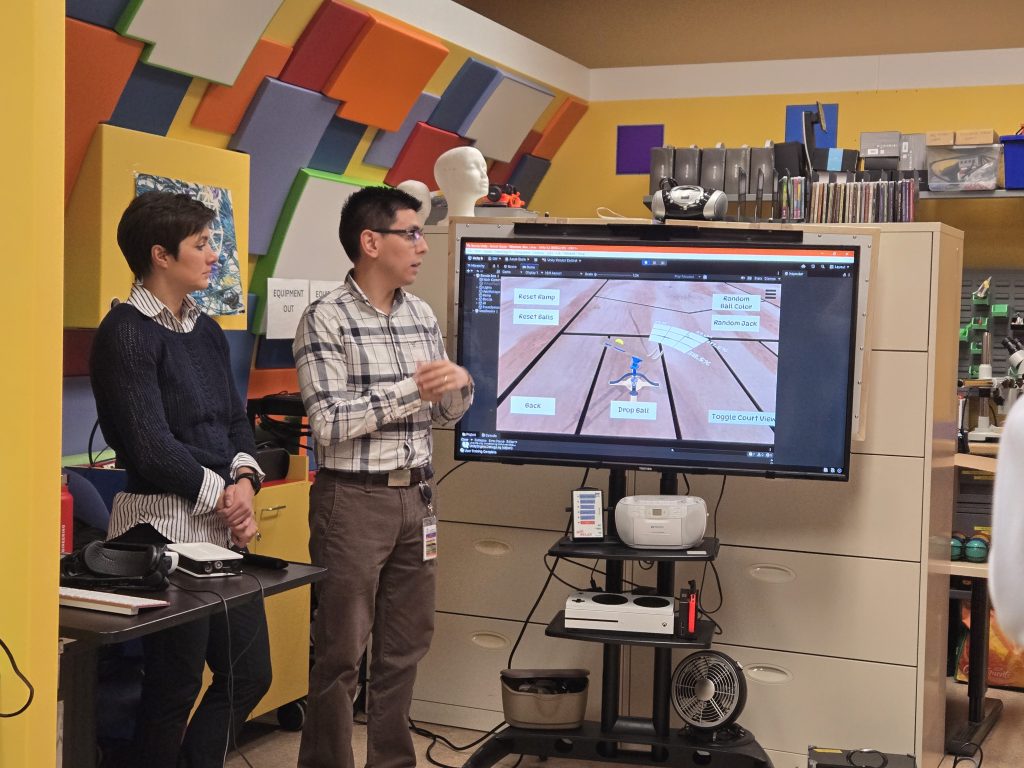
(Left to right) Nicole Romanow, BCI4Kids Program manager, and Dr. Daniel Comadurán Márquez, BCI4Kids Project Lead, demonstrate the BCI-enabled Boccia interface.
“Through this partnership with KBH+, the BCI4Kids program will allow kids who cannot move their bodies to play a Paralympic sport using only the power of their own brain,” says Dr. Adam Kirton, pediatric neurologist and principal investigator of the BCI4Kids program.
Based at the University of Calgary’s Cumming School of Medicine and located at the Alberta Children’s Hospital, the BCI4Kids program provides children and youth with severe neurological disabilities access to cutting-edge BCI technology. Using brain signals, participants can control mobility apps, assistive technologies, and interactive programs
For many children, this means gaining a new level of independence and participation in everyday activities, such as playing games, engaging in sports, or communicating with others.
Beyond the immediate impact for participants, this program is also advancing the future of pediatric BCI research. The vision of BCI4Kids is to build a child-and family-centred program that brings BCI technology out of research laboratories and into the communities where it can make the greatest difference. By working closely with children and families, researchers are helping shape technologies that are practical, accessible, and designed around real-world needs.
By supporting innovations such as BCI, KBH+ ensures cutting-edge solutions reach children, youth, and families, helping them unlock their full potential.
This article was originally published by Let’s Talk Science.